
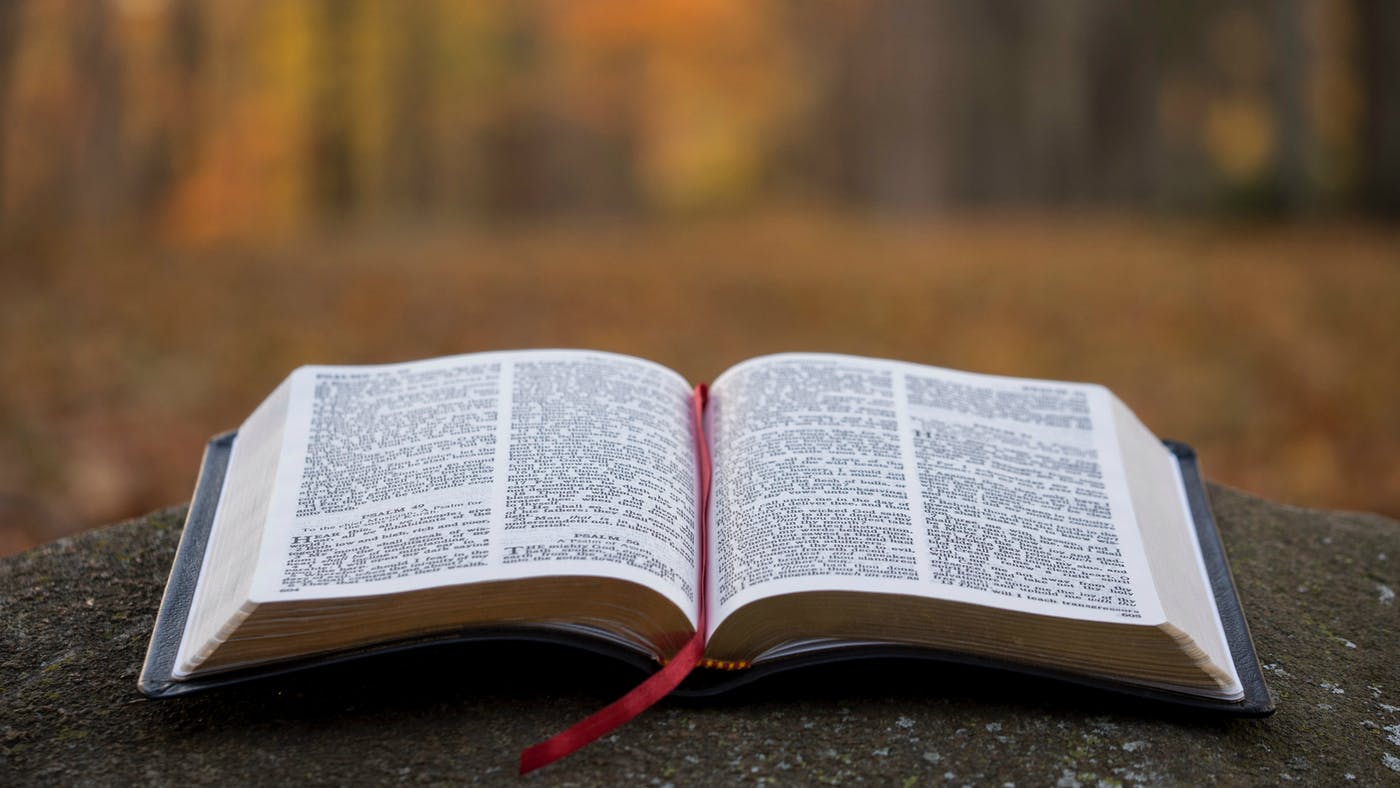
The healthy Christian is not necessarily the extrovert, ebullient Christian, but the Christian who has a sense of God’s presence stamped deep on his soul, who trembles at God’s word, who lets it dwell in him richly by constant meditation upon it, and who tests and reforms his life daily in response to it.
J.I. Packer (1926 – 2020), A Quest for Godliness: The Puritan Vision of the Christian Life, pub. 1990
We can only speculate as to what may have been going through Peter’s mind on that crisp, late-summer sabbath’s evening as our Lord led him, along with the brothers, James and John, “up into a high mountain apart by themselves.” (Mark 9:2) Luke tells us they were ascending the mountain to pray (Luke 9:28), although clearly Jesus had much more than prayer in mind for these, His three most prominent disciples. It is, however, quite certain that Peter, the vocal leader of the select trio, would have suspected nothing out of the ordinary with regard to that evening’s mountain hike as it was not uncommon for our Lord to seek isolation from the wearying crowds that followed Him in order to commune in peaceful solitude with His Father.
As for Peter, the events of the past week had been at the very least disheartening, and perhaps even overwhelming. Jesus had made clear His intent to “set His face for Jerusalem” (Luke 9:51, see also Matt 16:21) where, as He outlined for His disciples, He would suffer many things and be killed and raised again the third day. For Peter, as well as the other apostles, things were getting very real very quickly. Many of Jesus’ peripheral followers were already falling away. The cost of following Him had suddenly skyrocketed. Could it truly be worthwhile or even prudent to remain attached to this extraordinary but often enigmatic prophet from Galilee? Certainly that question must have found its way into the conscious thoughts of the outspoken Galilean fisherman known in his hometown of Bethsaida as Simon Bar-Jonah. Though it cannot be established for sure, I don’t think it would be a stretch to suggest that the events of the week now coming to a close had quite likely pushed Peter to a crucial tipping point, a decisive crossroads in his journey as a follower of Christ – and I believe that spot was exactly where our Lord wanted Peter to be as darkness began to settle, at least for the moment, on that high mountain path.
Just one week prior to this, Peter had been publicly commended by his Master for responding to Jesus’ question, “Who do you say that I am?” with the declaratory statement of faith, “You are the Christ, the Son of the living God.” Jesus called Peter “blessed” and referred to Peter’s confession as the “bedrock” upon which He would build His church. It was a watershed moment for the disciples and especially for Peter himself, who apparently thought he had figured it out all on his own – and that in spite of the fact that Jesus had made known to Simon Peter that it was His Father in heaven Who had revealed this truth to the outspoken disciple.
Peter’s arrogant pride, however, was soon revealed when, within minutes of being called “blessed” by our Lord, he was famously humiliated and rebuked by the same Lord – “Get thee behind me Satan” – after he pulled Jesus aside and undertook to correct the Son of God regarding the statements He had made to the disciples describing His path of suffering to glory. It would not be the last time that a divine personage would tell Peter to shut up.
The Gospel writers are judiciously silent as to what may have transpired in the six days between Peter’s hero-to-zero experience and his ascent with Christ up what scripture anonymously refers to as the “holy mountain” (2 Peter 1:18) or “a high mountain” (Matthew and Mark). Jesus had been ministering in the area of Caesarea Philippi, a Roman city 120 miles north of Jerusalem. Banias is the name by which the archaeological site is known today. It is situated at the foot of the Mount Hermon mountain cluster, the highest peak of which stands on the current border between Lebanon and Syria at a height of 9,232 feet above sea level. There is no record of Jesus having left that area until we see Mark’s statement, “and they departed thence” (Mark 9:30), which occurs some time after Jesus and the three disciples had made their way back down from the mountain. While Christian tradition has long held Mount Tabor, 50 miles to the south of Caesarea Philippi, to be the “holy mountain” of the Transfiguration, scriptural and historical evidence (the peak of Mt. Tabor is only 1529 feet above the plain of the Jezreel Valley and was occupied by a fortified city at the time of Christ) leads most scholars to conclude that the Transfiguration of Christ occurred on one of the slopes of snowy Mount Hermon.

Noted biblical scholar F.F. Bruce (1910 – 1990) [New Testament History, pub. 1969] puts the year at A.D. 29, while Harold Hoehner (1935 – 2009), in his landmark work Chronological Aspects of the Life of Christ (pub. 1978) makes, what seems to me, a powerful argument for A.D. 32. In either case, the time of year is not disputed – late summer to early autumn. Jesus would soon “steadfastly set his face to go to Jerusalem” (Luke 9:51), the cruel cross awaiting Him just six months hence.
There was only one pathway leading up Mount Hermon from Caesarea Philippi when British clergyman H. B. Tristram (1822 – 1906) visited the area in 1863, later publishing a detailed account of his Holy Land travels in his book The Land of Israel (pub. 1865). In a region that had seen very little topographic change since the time of Christ, it would seem to be a reasonably valid assumption that this route was, at least in a general sense, essentially the same pathway employed by Jesus and the chosen three in their ascent 1826 years earlier. Alfred Edersheim describes the scenic climb as one would have experienced it in the mid 1800s:
… there is only one road that leads from Cæsarea Philippi to Hermon, and we cannot be mistaken in following it. First, among vine-clad hills stocked with mulberry, apricot and fig-trees; then, through corn-fields where the pear tree supplants the fig; next, through oak coppice, and up rocky ravines to where the soil is dotted with dwarf shrubs. And if we pursue the ascent, it still becomes steeper, till the first ridge of snow is crossed, after which turfy banks, gravelly slopes, and broad snow-patches alternate. The top of Hermon in summer – and it can only be ascended in summer or autumn – is free from snow, but broad patches run down the sides expanding as they descend. To the very summit it is well earthed; to 500 feet below it, studded with countless plants, higher up with dwarf clumps.
Alfred Edersheim (1825 – 1889), The Life and Times of Jesus the Messiah, pub. 1883

It had been just seven days ago, immediately after Peter’s inspired confession of faith in “the Christ, the Son of the living God,” that Jesus had dropped what would have seemed like a bombshell on the disciples – “From that time forth began Jesus to shew unto his disciples, how that he must go unto Jerusalem, and suffer many things of the elders and chief priests and scribes, and be killed, and be raised again the third day.” (Matt 16:21)
The apostles were stunned. Peter, their leader and spokesman, refused to accept Jesus’ words and would soon let Him know about it – “How could these things be? Is it not written that Messiah will restore the kingdom? Have we not witnessed the miracles (most recently the feeding of the five thousand) testifying to the truth of our Master’s claim to be the Holy One of God? Has He not Himself said, ‘The kingdom of God is at hand?’ “
The apostles had even recently performed miracles on their own when Jesus sent the twelve out in pairs to heal the sick and cast out demons. It was a precursor of His kingdom rule. These men had their earthly futures clearly mapped out in their own minds. When Jesus swept into power and restored the Davidic Kingdom they would be right there by His side, standing as His servants in the manner of David’s mighty men, wielding the miraculous power of God as a sword of righteousness and judgement. And here was Peter, their undisputed leader – “Calm down fellas, I got this. The Master is just wavering a little. I’ll take Him aside and straighten Him out.”
Jesus’ response to Peter’s brazen chastisement – “Get thee behind me Satan” – surely cut the bold disciple to the very marrow of his soul, and our Lord’s subsequent words to all twelve apostles, perhaps the hardest of all Jesus’ sayings, absolutely dismantled their lofty dreams of earthly glory:
Then Jesus said to His disciples, “If anyone wishes to come after Me, he must deny himself, and take up his cross and follow Me. “For whoever wishes to save his life will lose it; but whoever loses his life for My sake will find it. “For what will it profit a man if he gains the whole world and forfeits his soul? Or what will a man give in exchange for his soul?”
Matthew 16:24-26 NASB
All three synoptic gospels document this episode in the life of Christ and all three employ the same Greek word for ‘deny’ – aparneomai. It is an intensified verb that means “to utterly renounce.” Jesus made it clear to the twelve that they must utterly renounce themselves, their visions of fame and fortune, even their own welfare if they were to be His followers. Those words hit the disciples like a tsunami.
Now, a week later, in the fading light and cool mountain air of a late summer evening, our Lord led His core leadership up the slope of a high mountain, away from murmurings and distractions, away from the throngs that predictably trailed behind a prophet who could turn seven loaves and a few little fishes into a meal for thousands, away from the general cacophony of life, to a place of solitude and communion with the Creator of the universe. Jesus had something special in store for these three, perhaps His greatest miracle of all, and boy did they need it – especially Peter.
Indeed, we can not know what thoughts were roiling through Peter’s mind during that long and most likely silent ascent up the slope of Mt. Hermon, but I firmly believe that the general tenor of his heart and spirit, after the week that he had just experienced, had to have been bent strongly toward a sense of despondency, and maybe even despair. How could it be otherwise? Certainly, this was not the future Peter had foreseen for himself the day he walked away from his successful fishing business on the Sea of Galilee to follow this controversial teacher who spoke with such power and authority, a prophet to whom even the winds and the seas paid royal obeisance. Yes, I believe at that moment, in the heart and mind of Simon Peter, he was convinced that his life could not have gone anymore sideways.
Only Luke, of the three gospel writers that provide a record of this event, tells us that Peter and his two companions fell asleep on the mountain top. In doing so he makes use of a powerful image. He says they were “weighted down” with sleep (Greek bareo – to weigh down, burden, or oppress). Emotional depression combined with physical fatigue will bear heavily on even the strongest of men.
It was but natural for these men of simple habits, at night, and after the long ascent, and in the strong mountain-air, to be heavy with sleep. And we also know it as a psychological fact, that, in quick reaction after the overpowering influence of the strongest emotions, drowsiness would creep over their limbs and senses. ‘They were heavy – weighted – with sleep,’ as afterwards at Gethsemane their eyes were weighted.
Edersheim, op. cit.
While the three were asleep Jesus prayed.
But then, something incredible happened. Matthew says of Jesus, “He was transfigured” and “His face did shine as the sun and His raiment was white as the light.” Mark uses the same verb (transfigured) and then provides this description – “His raiment became shining, exceeding white as snow; as no fuller (launderer) on earth can whiten (bleach) them.” But, of the three accounts, I think I like Luke’s description the best –
And as He prayed, the fashion of His countenance was altered, and His raiment was white and glistering. And, behold, there talked with Him two men, which were Moses and Elijah: Who appeared in glory, and spake of His decease which he should accomplish at Jerusalem. Now Peter and they that were with him were heavy with sleep: but when they were fully awake, they saw his glory…!
Luke 9:29-32
THEY SAW HIS GLORY! – You and I can not imagine what that moment would have been like. No one can, for none apart from Peter, James, and John, have ever experienced anything even approaching the incredible display to which these three men awoke. It was no mere dream or vision. The details of the three gospel accounts, when taken together, preclude any explanation that dismisses the concrete reality of the Transfiguration of Christ and the events that surrounded it. For a brief moment, on that isolated mountaintop, the veil of His humanity was lifted and the Son of God was revealed as we shall see Him face to face in heaven!
This was none other than the revelation of the essential glory of God that belongs to Jesus Christ.
J. Dwight Pentecost (1915 – 2014), The Words and Works of Jesus Christ, pub. 1981
It was the mountaintop experience that gave us the phrase “mountaintop experience” and its effect on the three disciples can hardly be overstated, for as dazzling as it was to the eye, there was much more to the Transfiguration of Christ than a purely visual demonstration of His glory. There was something deeper, something in the very essence of the revelation of the glory of God in Christ, that pierced these men to their very souls.
Matthew and Mark bring this out in the verb choice they use to describe the event – metemorphōthē – translated ‘He was transfigured’. We know the word by its anglicized noun form – metamorphosis. The Greek word is derived from meta, denoting change, and morphe – a word denoting form as the distinctive nature and character of an object. The descriptions of the event given to us by all three gospel writers deal solely with the outward change of Christ’s appearance, and there is a word, a different word (schêma), that would have been much more appropriate to those physical descriptions. Yet, that was not the word that was chosen. The gospel writers chose a word – metemorphōthē – which carries a much deeper meaning as it applies to this extraordinary event. Marvin Vincent’s (1834 – 1922) comments regarding this word choice are outstanding:
In truth, there is a deep and pregnant hint in the use of this word (metemorphōthē) which easily escapes observation, and which defies accurate definition. The profound and overwhelming impression upon the three disciples was due to something besides the shining of Christ’s face and garments, and the presence of Moses and Elijah; and was deeper and subtler than the effect of all these combined. There was a fact and a power in that vision which mere radiance and the appearance of the patriarchs could not wholly convey: a revelation of Deity breaking out in that glorified face and form, which appealed to something deeper than sense, and confirmed the words from heaven: This is my beloved Son.
Marvin Vincent (1834 – 1922), Word Studies in the New Testament, Vol. 1 (pub. 1887)
While it is clear the three disciples were deeply affected by what they had experienced, it is also equally clear that they did not fully understand at that point in time the significance of the event, nor did they interpret it correctly. This is manifested by the words of their leader, Simon Peter, who felt impelled to relate his faulty interpretation of the experience (Luke and Mark both tell us that Peter didn’t know what he was talking about) and was, in effect, told to shut up and listen – this time by God the Father – as a voice from heaven interrupted him, declaring, “This is my Son, My Chosen One; listen to Him!” (Luke 9:35)
With those words the Father confirmed His purpose in allowing the core apostolic leadership to witness the revelation of the glory of His Son. Jesus had told the disciples that He was going to Jerusalem to be put to death, but His Transfiguration on the mountaintop told them that the grave would not hold Him, and that He would return in glory, power, and righteous judgement. This they saw with their own eyes. The message was clear – “Behold the living Word of God. YOU MUST LISTEN TO HIM!“
And indeed, there can be no arguing the impact of this event on the life and ministry of Peter, as well as those of his companions James and John. This is the event to which John makes reference in his gospel when he says, “And we beheld His glory, the glory as of the only begotten of the Father.” (John 1:14) At a time in Peter’s life when his faith was likely wavering, when his heart was no doubt discouraged, and when his mind was assuredly bewildered as to his purpose in life, our Lord graced Simon Peter with a spiritual ‘mountaintop’ experience that has never been equaled. What an incredible blessing, comfort, and encouragement!
And yet, as amazing as that mountaintop encounter must have been, as memorable as it obviously became, and as life-altering as it certainly proved to be, Peter’s extraordinary experience on the holy mountain was not sufficient to sustain his faith through the dark and fiery trials that were awaiting him just six months down the road in Jerusalem.
Peter’s faith began to waver in the upper room the night before the Crucifixion when Jesus told His disciples, “Where I am going, you can not come” and, “A new commandment I am giving to you.” Six months ago on the Holy Mountain an audible voice from heaven – directed specifically to Peter – had proclaimed, “This is My Son…Listen to Him!” That evening in the upper room God’s mountaintop instruction was abandoned by Peter as he ignored the vital revelation of a new commandment and instead became dismayed by Christ’s statement regarding His departure, resulting in an impulsive promise of loyalty that would not stand for even twenty-four hours. (John 13:33-38)
Peter’s faith then succumbed to fear in the courtyard of the high priest, Caiaphas, during the dark, predawn hours of the following morning when the brash apostle vacated his impetuous pledge, just as Jesus said he would, and denied Christ three times before the rooster’s crow announced the coming of the new day. (John 18:15-27)
And finally, Peter’s faith gave way to discouragement in the aftermath of his agonizing failure in the courtyard – even after having seen and spoken to the risen Christ – when he made the decision (later repealed, of course) to return to his previous life as a fisherman on the Sea of Galilee. (John chapter 21)
So, what are we to make of this? How do we reconcile Peter’s miraculous, incredible, uplifting, and revelatory experience on the mountaintop with the startling collapse of his faith just six months later? Can these two extremes be reconciled? It is a question that may not have been worth consideration if Peter had faded away into obscurity after the Resurrection, for there have been many a professing believer since Simon Peter who have soared high on the winds of an emotional spiritual experience only to later crash, burn, and fall away completely from the faith. Examples are plentiful. But, as we well know with regard to Peter, such was not the case – for Peter, who was always the undisputed leader of the Twelve, was to become the preeminent apostle of the early church.
Every New Testament list of the twelve apostles places Peter’s name first. Peter is the lead character in the first twelve chapters of the Book of Acts. He was the apostle who stood up among the disciples after the Ascension and led them in the choosing of Judas’ replacement. It was Peter who stood on the day of Pentecost and proclaimed the message of faith in the risen Christ that resulted in 3000 people being added that day to the church in Jerusalem. It was Peter who was sent to the first Samaritan believers, along with John, and prayed that they would receive the gift of the Holy Spirit, thus validating the Samaritan’s inclusion into the fellowship of God’s grace. And it was Peter to whom God assigned the privilege of being the first to proclaim the Good News to the Gentiles when he was sent to preach in the home of Cornelius, the Roman centurion.
In effect, Peter was THE point man of the Great Commission. When the door of the gospel was first opened to Jerusalem, then to Samaria, and then to the uttermost parts of the earth (the Gentiles), the hand that turned the knob and pushed that door wide open was attached to the arm of none other than Simon Peter – the apostle who, six months after having seen with his own eyes the glorified Christ atop the Holy Mountain, openly denied Him, not just once but three times.
About 33 years after his “mountaintop” experience, probably sometime in early 65 AD, Peter, knowing that his death at the hand of the Roman emperor Nero was imminent, penned the letter which would, in effect, become his last will and testament. And in that letter, of all the incredible life experiences that Peter could have brought to remembrance, (and you know there had to have been a lot of them,) he makes mention of only one: the day the majesty of our Lord shattered him as he beheld the unveiled glory of Jesus atop the Holy Mount of Transfiguration.
This amazing document has survived the centuries intact and is available to us today. We know it as The Second Epistle of Peter, the 22nd of the 27 divinely inspired books of the New Testament – and, by the grace and wisdom of God, Peter does not leave us to speculate as to a proper perspective with regard to spiritual “mountaintop experiences.”
In 2 Peter 1:12-15, Simon Peter speaks of his upcoming death and the related purpose for his writing this second general epistle, i.e. “to make sure you always remember these things after I am gone” (vs 15) – and the keynote, the “these things”, of the great apostle’s final communication to all those who “have obtained like precious faith” (vs 1), can be summed up by one word: knowledge. He uses some form of the words “know” or “knowledge” 16 times in just 3 short chapters – 17 times if we count a form of the word (alpha privative) that denotes an absence of knowledge. 6 of the 16 instances reference knowledge of Jesus specifically while 2 additional instances are found in the nearly synonymous expression, “knowledge of the way of righteousness.”
In fact, Peter bookends his entire letter (excluding the greeting in verse 1) between two verses designed to urge his readers on to growth in the knowledge of Christ:
2 Peter 1:2 – May grace and peace be lavished on you as you grow in the rich knowledge of God and of Jesus our Lord!
And the final verse of the epistle:
2 Peter 3:18 – But grow in the grace and knowledge of our Lord and Savior Jesus Christ. To him be the honor both now and on that eternal day.
Simon Peter is about to make his exodus from this world (Greek ἔξοδος, exodos, in verse 15) and the burden that weighs most heavily on his mind at this terminal juncture of his life is to bring his readers to a remembrance of their critical need to grow in the knowledge of Jesus our Lord. Respected British theologian Michael Green provides this insight into Peter’s mindset:
…he makes both the experience of God’s peace and the reception of His grace (or help) to be dependent upon the deep knowledge of God, and of Jesus…Peter sees the knowledge of Christ as spanning the whole arch of Christian experience.
Michael Green (1930 – 2019), 2 Peter and Jude, Tyndale New Testament Commentaries, pub. 1989
In this we find Peter fully aligned with Paul, for both apostles “saw that the knowledge, not about but of Jesus Christ, was both the root and the goal of Christian experience.” (Green, op. cit.). In chapter 1:2-4 Peter minces no words and makes his point crystal clear – life and godliness are enshrined in Jesus Himself and it is only in knowing Him in ever-increasing degrees that we can enjoy the power to live the holy life to which we are called:
May grace and peace be lavished on you as you grow in the rich knowledge of God and of Jesus our Lord! I can pray this because his divine power has bestowed on us everything necessary for life and godliness through the rich knowledge of the one who called us by his own glory and excellence. Through these things he has bestowed on us his precious and most magnificent promises, so that by means of what was promised you may become partakers of the divine nature, after escaping the worldly corruption that is produced by evil desire.
2 Peter 1:2-4 NET
The essence of Peter’s 2nd epistle is summed up well by Green:
True knowledge of God and Christ produces grace and peace in the life; what is more, it produces holiness. The whole New Testament unites in denouncing a profession of faith which makes no difference to behavior.
Green, op. cit.
It is within this context – to know Christ more fully that we may live lives that are worthy and holy – that Peter chooses to recount his incredible experience on the mountaintop where he beheld the unveiled glory of the Son of God, calling on his readers to consider his own personal experience in the presence of the glorified Christ.
For we did not follow cleverly devised stories when we told you about the coming of our Lord Jesus Christ in power, but we were eyewitnesses of his majesty. He received honor and glory from God the Father when the voice came to him from the Majestic Glory, saying, “This is my Son, whom I love; with him I am well pleased.” We ourselves heard this voice that came from heaven when we were with him on the sacred mountain.
II Peter 1:16-18 NIV
Peter’s retelling of the mountaintop event is designed to affirm the impact of the Transfiguration, not only upon himself, but also upon the two apostles who were present with him. Moreover, he uses the incident to emphasize his authoritative knowledge of Christ, and makes use of his authority as an apostle to extend the application of his experience to all believers. Peter’s appeal is intended to stir up in his readers’ hearts a recollection of both the means to and the motivation for growing in the knowledge of our Savior –
Therefore, I will always be ready to remind you of these things, even though you already know them, and have been established in the truth which is present with you. I consider it right, as long as I am in this earthly dwelling, to stir you up by way of reminder,
II Peter 1:12-13 NASB
– for it is only by an ever-increasing knowledge of Christ that one is able to achieve the godly manner of life described by Peter in 1:5-8:
For this very reason, make every effort to add to your faith goodness; and to goodness, knowledge; and to knowledge, self-control; and to self-control, perseverance; and to perseverance, godliness; and to godliness, mutual affection; and to mutual affection, love. For if you possess these qualities in increasing measure, they will keep you from being ineffective and unproductive in your knowledge of our Lord Jesus Christ.
II Peter 1:5-8 NASB
The Means – If we are to increase in the knowledge of Christ, we must BEHOLD HIS GLORY, just as Peter and his two companions did on the mountaintop. Consider again Luke’s transfiguration narrative, “they saw His glory,” and the mountaintop testimony of one of the eyewitnesses, John, “and we beheld His glory.” Peter brings the same theme to the forefront in verse 17, “For He received from God honour and glory.” And remember again Peter’s introductory statement from verse 3, “…his divine power has bestowed on us everything necessary for life and godliness through the rich knowledge of the one who called us by his own glory and excellence.” The repeated use of the word “glory” is not coincidental.
God’s glory resides in Christ (Heb. 1:3). To know Him is to see His glory, to see His glory is to know Him. His glory is the manifestation of who He is in both His divine nature and His perfect humanity. This is the thing Peter learned on the mountaintop. This is the message he wants to pass on to you and me before he moves on to eternity. Every preconceived notion that Peter had concerning the messiah and the man, Jesus, was shattered the instant he beheld the Son of God in glory; and the single, simple prime directive for all believers – to know Him – became clear and evident to Peter in that moment, despite his failure six months later. And, even though he misinterpreted the Lord’s intent and His kingdom timeline, Peter’s suggestion to build shelters on that holy ground clearly revealed his desire to stay and abide in the majesty of Christ for as long as he could. Peter knew he was experiencing something special, and he didn’t want it to end.
The Motivation – The preeminent motivation for a diligent and valiant (yes, valiant – “possessing or showing courage or determination”) pursuit of holiness through a rich knowledge of Christ is rooted in His imminent return:
Therefore, my brothers and sisters, make every effort to confirm your calling and election. For if you do these things, you will never stumble, and you will receive a rich welcome into the eternal kingdom of our Lord and Savior Jesus Christ…For we did not follow cleverly devised stories when we told you about the coming of our Lord Jesus Christ in power, but we were eyewitnesses of His majesty.
2 Peter 1:10-11,16 NIV
The most powerful impetus for the pursuit of godliness in this present world is the promise of “a rich welcome into the eternal kingdom of our Lord and Savior Jesus Christ.” This is no man-made fable, Peter tells us, “for we (Peter, James, and John) saw Him with our own eyes, on the Holy Mountain, eyewitnesses of His majesty – a preview of Christ’s return in glory!” (2 Pet.1:16)
Peter ultimately brings the focus of his experience on the mountaintop to matters of eternal consequence. For a brief moment in time, at a specific geographic location, God the Father transposed the glory of heaven into the earthly continuum of time and space. The impact of that experience on the apostle Peter was so powerful and unforgettable that, over thirty years later, it still served as motivation for him to preach of the wonders of salvation through Christ, even when facing an agonizingly cruel and certain death.
For most 21st-century churchgoers, the suggestion that Christ’s imminent return would serve as motivation for a holy lifestyle borders on silliness. The demands of godliness are incongruous with the carnal, narcissistic Christendom of today where luxury, entertainment, and recreation are priority pursuits for a vast majority of professing believers. Such a worldly mindset, however, has not always been the Christian norm.
The modern comforts of today were unknown to past generations of Christians, and they were better off for it. Tribulation, hardship, and a familiarity with the transitory nature of the present world produces in Christ-followers an inward clarity of purpose, one which views this temporal life as the training ground for eternal life, resulting in an intense focus on matters of eternal import, not the least of which is the testimony of a holy and godly lifestyle – something which has always been a historic Christian emphasis, even though today it has all but vanished.
Consider, for instance, J. I. Packer’s observations regarding the 17th-century English Puritans:
The Puritans experienced systematic persecution for their faith; what we today think of as the comforts of home were unknown to them…in a world in which more than half the adult population died young and more than half the children born died in infancy, disease, distress, discomfort, pain and death were their constant companions…the Puritans’ awareness that in the midst of life we are in death, just one step from eternity, gave them a deep seriousness, calm yet passionate, with regard to the business of living that Christians in today’s opulent, mollycoddled, earthbound Western world rarely manage to match. Few of us, I think, live daily on the edge of eternity in the conscious way that the Puritans did, and we lose out as a result.
Packer, op.cit.
Peter views the connection between personal godliness and the imminent return of Christ to be of such paramount importance that he revisits the topic again in his closing words of chapter 3, topping off an extended exposition on Christ’s return to a world full of mockers in 3:3-13 with the ‘therefore’ exhortation of verse 14:
Therefore, beloved, since you look for these things, be diligent to be found by Him in peace, spotless and blameless
II Peter 3:14 NASB
Peter was a fiery, intensely emotional man. His words as he recounts his mountaintop experience bring to mind an aging father, baring his heart, pleading to his children – “listen to me, learn from my experience! This is the legacy I want to pass on to you!” His letter, though small in length, packs a powerful-big charge, perhaps the most emotionally charged epistle of the New Testament; and the words that fuel the mighty engine of Peter’s message all the way to the final verse of the epistle are found in verse 15, immediately preceding his Transfiguration narrative:
Indeed, I will also make every effort that, after my departure, you have a testimony of these things.
II Peter 1:15 NET
I am thankful for Peter’s desire to “make every effort,” for Peter knows all too well that as potent, compelling, and magnificent as it was, his own personal experience of the glory of Christ on the mountaintop was not sufficient to sustain him through the fiery trials that were to come. And, while he knows that his testimony regarding that experience is profitable for the edification of the saints, he also knows that there is no experience in and of itself that will provide food enough to sustain the beloved sheep that he has been tasked to feed (see John 21:15-19, the direct connection between that encounter and this epistle is unmistakable), nor will it protect them from the treacherous false teachers that will roam among them like wolves – a hazard to which he devotes the entire 2nd chapter of this epistle.
Yes, Peter is most definitely familiar with the nature of spiritual experiences. We often misinterpret them in the moment, just as he did, and we inevitably forget them over time, again, just as Peter did. Moreover, experiences are unique to individuals. None of us will behold the glory of the transfigured Christ in the same manner and under the same circumstances that Peter did. Peter’s experience was his alone. We can all learn from it, but the recounting of it will not pierce us to the very core of our being in the same manner that the actual event did to the three men who were present when it happened. It’s a classic case of “you just had to be there.”
These shortcomings of experiential knowledge do not by any means discount Peter’s testimony nor the lessons he draws from his mountaintop experience, but rather they highlight the fact that there is something even better, something more sure than a spiritual experience, a more sure way to behold the glory of Christ and thus to learn of Him, more sure even than Peter’s incredible appointment with the glorified Christ on the holy mountain. In point of fact, it is impossible to comprehend the significance of that which follows in verse 19 if one does not grasp the magnificence of the Transfiguration experience Peter has just described in verses 16 – 18.
Here then is the end to which the great Apostle is guiding us, saying in effect, “As glorious as my experience was, and as valuable as it is to your edification and knowledge of Christ through me, there is something even better, a medium superior to any experience by which you can know Him in all of His glory!”
Having set before us his miraculous mountaintop encounter as the gold-standard of spiritual experiences, Peter will now compare a treasure of far greater and even more certain value and, unlike his personal experience, a gift fully accessible to ALL believers. That comparison comes in verse 19. It is the kingpin statement upon which the entire letter is hinged. The Greek phrase is kai echomen bebaioteron ton prophetikon logon, and I’m going to translate it in the literal Greek word order because, first of all, it is the translation which gives the greatest clarity and insight into the heart and mind of the Great Apostle, and second, because it is the translation which attaches to scripture the highest possible view:
And we have more sure the prophetic word…
II Peter 1:19a lit.
A prophet was simply one who spoke as God’s mouthpiece. Peter’s phrase “the prophetic word,” ton prophetikon logon, refers to the Word of God, the Holy Scriptures. For his immediate readers it was the Old Testament, for you and me it is the completed canon of scripture including the New Testament, the Bible that we have today.
“More sure” is the translation of bebaioteron. Bebaios is an adjective meaning firm, certain, reliable, sure. The ending teron marks it as an adjective in what’s called the comparative degree – firmer, more certain, more reliable, more sure.
And we have more sure the prophetic word – this is an incredible and powerful statement coming from the point-man of the Great Commission. Alongside the gold-standard of authentic human spiritual experience – the Transfiguration event to which he was an eyewitness – Peter has set the divinely inspired Word of God and declares, “this Word is more sure!” Even though his experience was true and wonderful and glorious, God’s written Word surpasses it as a conduit of the rich knowledge of Christ, more sure and certain than any human experience can ever be – and it is a resource to which ALL believers have access.
Nineteenth century expositor Samuel Cox is oft quoted, and rightfully so, with regard to this passage:
St. Peter knew a sounder basis for faith than that of signs and wonders. He had seen our Lord Jesus Christ receive honour and glory from God the Father in the holy mount; he had been dazzled and carried out of himself by visions and voices from heaven: but, nevertheless, even when his memory and heart are throbbing with recollections of that sublime scene, he says, “We have something surer still” in “the prophetic word.”
Samuel Cox (1826 – 1893), “From Starlight to Sunlight, II Peter 1:16-20”, The Expositor 1st series 1.3 (March 1875) pg. 177
And we have more sure the prophetic word – what an astounding proclamation for our time! Influenced by the secularization of Western society in general, a large segment of Christendom today exalts spiritual experiences and feelings to a level far above that of the inerrant Word of God. It is a distressing trend reflective of our age in general and summed up well by D. A. Carson:
In an age increasingly suspicious of (linear) thought, there is much more respect for the “feelings” of things – whether a film or a church service.
D. A. Carson (b. 1946), Worship by the Book, pg. 30, pub. 2002, edited by D. A. Carson
But here, against the backdrop of the transfigured Christ, Peter presents the Word of God as a sounder basis of faith, more so than any experiential event, both to those who are coming to Christ for salvation and to those who have already come to Him and are patiently awaiting His return. Remember, this entire letter is set within the context of an ever-increasing knowledge of Christ. When stretched across that framework, i.e to better know Jesus in order to advance in godliness, Peter’s declaration becomes marvelously counter-intuitive to our natural human inclinations.
Regardless of the historical era, it seems to be a part of our essential human nature to set great store by experiences. That commonality is clearly evident in today’s super-charged world of instantly-shared information, but it has always been a fundamental characteristic of man, and quite often his bane. The danger inherent in the exegesis of experiences as opposed to the Word of God is that experiences are not fully reliable as instruments of truth. Sometimes they are absolutely unreliable. Two people can experience the same event and draw from it two conclusions that are categorically opposed to each other. Courtrooms have been dealing with this issue for years with regard to eyewitness accounts:
Memory doesn’t record our experiences like a video camera. It creates stories based on those experiences. The stories are sometimes uncannily accurate, sometimes completely fictional, and often a mixture of the two; and they can change to suit the situation. Eyewitness testimony is a potent form of evidence for convicting the accused, but it is subject to unconscious memory distortions and biases even among the most confident of witnesses. So memory can be remarkably accurate or remarkably inaccurate. Without objective evidence, the two are indistinguishable.
Dr. Stephen L. Chew (b. 1956), Professor of Psychology Samford University, Myth: Eyewitness Testimony is the Best Kind of Evidence, Association for Psychological Science, article pub. August 20, 2018
As Christ-followers our objective evidence is the Word of God. Our life-experiences both good and bad, our worship experiences both private and corporate, can be wonderful and valuable mediums to a greater knowledge of our Lord and Savior. In fact, they are necessary mediums; but we must interpret them properly in the objective light of God’s Word, and that means it is imperative that we be diligent in our personal Bible study, diligent in knowing the Word of God.
But even more than this, the truest and most sure path to a greater knowledge of Christ is to gaze upon Him as He is revealed in the pages of scripture. Therein is the pathway to godliness, true fellowship with the Lord, and love unfeigned towards others – all of which spill over into a passionate desire to worship the Creator:
If you wish to deepen the worship of the people of God, above all deepen their grasp of his ineffable majesty in his person and in all his works.
Carson, op. cit.
Personal experiences can be wonderful, but experiences alone will not suffice. Just ask Peter, “We have more sure the prophetic word!“
The sad alternative to an ever-increasing knowledge of Christ is an utter failure of personal holiness, as well as corporate Christian chaos induced by the destructive heresies infiltrated into the church by evil and debauched false teachers. Peter alerts us to these dangers throughout the balance of his letter, culminating with this final warning:
Therefore, dear friends, since you have been forewarned, be on your guard that you do not get led astray by the error of these unprincipled men and fall from your firm grasp on the truth. But grow in the grace and knowledge of our Lord and Savior Jesus Christ.
II Peter 3:17-18a NET
My friends, is it your heart’s desire to behold the glory of the Son of God as Peter did on the mountaintop, to sit at Jesus’ feet and learn of Him, to touch the garment of the One who gave His life for you, to gaze upon the majesty of the Creator of the universe? The means is readily available, says Peter. You have the written Word of God – the more sure prophetic word, more sure and certain than any temporal spiritual experience – for the Word of God abides forever and is altogether reliable:
You do well if you pay attention to this as you would to a light shining in a murky place, until the day dawns and the morning star rises in your hearts. Above all, you do well if you recognize this: No prophecy of scripture ever comes about by the prophet’s own imagination, for no prophecy was ever borne of human impulse; rather, men carried along by the Holy Spirit spoke from God.
II Peter 1:19b-21 NET
At this juncture it becomes necessary for me to address a translation issue with regard to verse 1:19 – lit. trans., we have more sure the prophetic word – that has been the subject of much debate. I would not bring it up at all if not for the fact that the translation that you are using may read differently than that which I have presented here. The academic dialog regarding this passage highlights our need to study the Word more thoroughly and to read it in multiple translations in order to grasp more clearly an accurate sense of the meaning. Electronic resources such as YouVersion Bible and BibleGateway are readily available for this purpose. We have a wealth of reliable translations at our disposal today. None of them is absolutely perfect.
The crucial word in this debate is the comparative adjective bebaioteron. “More sure” is its literal meaning. As previously stated, it is the Greek comparative form of an adjective, bebaios, that means “sure” or “certain.” Because of its word-order position in the sentence, what’s called the predicate position, some scholars prefer to render bebaioteron as a verbal adjective rather than a comparative. As a result the more common interpretation has come to be “we have the prophetic word made more sure”. The intent of this rendering is that the Transfiguration experience, and more specifically the words spoken by the voice from heaven, confirmed and reinforced the words of scripture.
This is the position held by a number of respected Greek scholars including Kenneth Wuest (1893 – 1961) and A. T. Robertson (1863 – 1934). Conservative theologian Charles Ryrie (1925 – 2016) seems to endorse this position as well in the notes of his study bible, and it is the rendering that has won over and been adopted by the translation committees of most of our modern reliable translations, i.e. NASB, NLT, ESV, HCSB, and RSV.
The verbal adjective interpretation is in direct opposition to what I will call the traditional comparative interpretation which is based on a literal comparative rendering of bebaioteron as “more sure.” The traditional comparative interpretation is the one to which I adhere. It holds the scriptures to be a testimony superior to the Transfiguration experience.
The traditional comparative interpretation is reflected in the KJV rendering and in the NASB margin notes. A partial list of the proponents of this interpretation is impressive and varied, including scholars and theologians from the past such as John Wycliffe (c. 1320s – 1384), John Calvin (1509 – 1564), John Wesley (1703 – 1791), Samuel Cox (1824 – 1889), Marvin Vincent (1834 – 1922), and Benjamin Warfield (1851 – 1921), as well as modern expositors such as E.M.B (Michael) Green (1930 – 2019), and John MacArthur (b. 1939).
Current scholarship has, in my opinion, successfully refuted and put to rest the verbal adjective position on both grammatical and historical grounds. Michael Green, for instance, offers these outstanding comments addressing both the Greek verbiage and the historical context of verse 19:
It is extremely difficult to squeeze this meaning ‘we have the prophetic word made more sure’ out of (comparative adjective) echomen bebaioteron, lit. ‘we have more sure.’ If Peter had meant to say this, why did he not use the normal construction and write (passive verb) echomen bebaiōthenta? And it is even more difficult to squeeze such a sentiment out of a first-century Jew, let alone a Christian apostle. The Jews always preferred prophecy to the voice from heaven. Indeed they regarded the latter, the bath qōl, ‘daughter of the voice’, as an inferior substitute for revelation, since the days of prophecy had ceased. And as for the apostles, it is hard to overemphasize their regard for the Old Testament. One of their most powerful arguments for the truth of Christianity was the argument from prophecy. In the word of God written, they sought absolute assurance, like their Master, for whom ‘it is written’ sufficed to clinch an argument.
Green, op.cit.
Green’s comments, published in 1989, regarding the Jews’ high esteem for scripture, mirrors a similar statement made by Calvin in the 16th century:
…it was not doubted by the Jews but that all the things which the prophets had taught, came from the Lord, it is no wonder that Peter said that their word was more sure.
John Calvin (1509 – 1564), Commentary on II Peter, pub. circa 1555
As regards the grammar of verse 19 specifically, the NET Bible (pub. 2005, revised 2017) provides this note:
The comparative adjective bebaioteron (more sure) is the complement to the object ton prophētikon logon (the prophetic word). As such, the construction almost surely has the force “The prophetic word is more certain/altogether certain – and this is something that we all have.” Many scholars prefer to read the construction as saying “we have the prophetic word made more sure,” but such a nuance is unparalleled in object-complement constructions.
This NET Bible note echos the research of DTS professor Daniel Wallace:
…the rendering “we have the prophetic word made more sure” is unlikely from a grammatical standpoint. The construction almost surely has the force “The prophetic word is (more certain/altogether certain)—and this is something that we all have.”
Dr Daniel B Wallace (b. 1952), professor of New Testament studies at Dallas Theological Seminary, senior New Testament editor of the NET Bible, The Translation of 2 Peter 1:19a, pub 2004
A more recent debate involves the question as to whether bebaioteron should be translated as “more sure” (comparative sense) or “altogether sure” (elative sense). The latter rendering is the choice of both the NIV and the NET. Both of these renderings are grammatically acceptable based on historical usage. The “altogether sure” rendering is the preferred translation for those that view Peter’s transfiguration account primarily as a defense of his apostleship and therefore “the author labors to show that his gospel is trustworthy precisely because he was an eyewitness of this great event” (NET notes). The implication is that the testimony of Peter’s experience is on an equal footing with ton prophētikon logon, the prophetic word, thus ruling out a “more sure” comparison.
To my mind it is not debatable as to whether Peter’s testimony is scripture. It’s a part of the New Testament canon. However, I disagree with the premise that Peter is recounting his mountaintop experience primarily to defend his apostleship. Peter wants you and me to behold the glory of our Savior. Experiences properly interpreted can present a wondrous picture of Christ, but the picture presented in God’s word is better, and more sure. I believe that is Peter’s primary message to his readers.
 Unassailable Gospel
Excellent post! Both scholarly and personal. I thought the reference of Calvin’s 2 Peter commentary was useful although many Southern Baptists think Calvin had never read 3:9 😉
I was fortunate to spend the summer of 1990, the summer before I was married, in an archaeological dig in Banias. (With SMSU, Pepperdine, Abilene Christian University,
and a few more schools.) Amazing place! I am certain, after years after we left and others resumed our work, it is even more amazing now. Banias has a stunning rock bluff with shrines to the Greek god Pan carved in them. There is one of the main headwaters of the Jordan (along with Dan) at that bluff and previous to an earthquake over 1900 years ago, the Jordan gushed out of the ground there. (The earthquake apparently slowed its flow).
We have never needed to read the more sure Word than we do these days! Thank you for your time on this excellent piece.
LikeLiked by 1 person
I need to come visit this blog more often! Your content is amazing 🙂
LikeLiked by 1 person