
What is the sum of a man’s life? How can it be measured? I suppose there are any number of Hollywood movies that address this theme in one way or another. Among them is one of my favorites, a movie that came out in 1995 called “Mr. Holland’s Opus.” It portrays the fictional life of musician/composer Glenn Holland who, as a young man, accepts a position as a high school music teacher thinking that the job would allow him the time to devote to his true passion: the composition of his own symphony, his magnum opus. The movie follows him through his thirty-year teaching career, chronicling the struggles that ensue as he attempts to cling to a dream that is slowly crumbling under the weight of life’s everyday responsibilities. As Holland’s teaching career and student relationships begin to demand an ever-increasing amount of his time, and as family responsibilities expand and battle for his attention, Mr Holland’s dreams of musical fame and glory slowly grow dim, ultimately fading to black.
The movie’s plot develops two points of tension with regard to Holland’s family that are significant and worthy of notice. One is between Holland and his wife as their marriage confronts the strains and temptations of everyday life. The other is between Holland and his son, who is born deaf and therefore unable to share in his father’s love of music. The positive resolutions of both of these conflicts provide two of the more poignant moments of the film. Yet, each one progressively steers the ship of Holland’s life away from the bearing he had set for it in the brashness of his youth.
Over the course of his career Mr. Holland does eventually finish his symphony, working on it in bits and pieces as he is able, but he finishes it so late in life that it seems no one will ever hear it performed. As retirement draws near, Holland becomes resigned to the fact that his dream of becoming a famous composer will not be fulfilled. The personal relevance which he attached to such an achievement, the significance which he so deeply desired as a young man, has eluded him. Even though Holland ultimately makes the right choices to save his marriage and salvage his strained relationship with his son, the advance of years brings with it a measure of regret and disappointment. Dreams can be difficult to surrender.
On the day of his retirement from teaching, Holland is unwittingly led to the school auditorium where hundreds of past students have assembled to surprise and honor their favorite high school teacher. Present at this event is one of his most musically challenged former students who is now the governor of the state. The culmination of the movie is expressed in this statement that she (the governor) makes to Mr. Holland: “Look around you. There is not a life in this room that you have not touched, and each of us is a better person because of you. We are your symphony, Mr. Holland. We are the melodies and the notes of your opus. We are the music of your life!” Cue tears and voilà! – all things suddenly fall into their proper perspective. Or do they?
I must admit that the “we are the music of your life” line and the general theme of unfulfilled youthful dreams strikes a chord with me. It apparently struck a chord with a lot of people as the movie was a fairly popular box office success. I like “Mr Holland’s Opus.” In fact, since seeing it for the first time, it has been one of my favorite movies. I like Glenn Holland, his work ethic, his pursuit of excellence, and his drive to have a positive impact on young lives – his willingness to take up the fight for the betterment of their futures. I like the fact that he chose family instead of fame when their parallel courses diverged and a choice had to be made. I can relate to him and to the struggles and passions of his life, the search to find his purpose and calling, the disappointment at seeing the dreams of youth fade when they are exposed to the light of reality. Most men can relate as well. We all engage in that ubiquitous search for significance, the struggle for relevance in an ocean of similitude. “Mr. Irrelevant” is the title bestowed each year to the last pick of the NFL draft. No man wants to be tagged the “Mr Irrelevant” of life. “Mr Holland’s Opus” plays this theme out to a clever and pleasant resolution. I guess I kinda like that, also.
Nevertheless, as much as I like the movie, there has always been a note to the ending that strikes me as just a little bit off, almost as if the story resolves on a dissonant chord. I guess you could say there was something that just wasn’t sounding right to me. It took me a while to figure out what it was, but eventually I was able to put my finger on it: it’s the ‘music,’ the ‘music’ of Holland’s life, the life’s work that the movie story-tellers decided to choose as the defining accomplishment of Mr Glenn Holland. I am not saying the ‘music’ of Glenn Holland’s life is bad. It’s good music. A career that impacts others in a positive way is a good thing. A life devoted to helping kids is a good thing. It’s good ‘music,’ but it’s not great ‘music.’ It’s the Beatles, but it’s not Beethoven.
For many men, including the fictional Glenn Holland, there is a superior genre of ‘life’s music.’ There is a lifework that is capable of achieving a much higher plane of excellence than that which is presented to us in a Hollywood movie. It is not a work that is available to all men, and there is nothing wrong with that. But it is a province for many men – and for those to whom it has been given, it is a high calling indeed. I am speaking of fatherhood.
There is no such thing as an irrelevant father. The moment a man becomes a father, his life becomes enormously relevant to at least one other living soul. Fathers who take their responsibilities seriously do well, and become significant forces for good. Bad fathers, absent fathers, and fathers who have abdicated their responsibilities are significant forces for evil. Whether for good or for evil, the impact of a father is powerful.
I believe our society has absolutely lost sight of this truth. Our culture has succeeded in marginalizing the role and importance of fathers by attempting to destroy the traditional family structure. Since 1950 the rate of serious crimes (murder, rape, armed criminal action) committed by children age 14 and under has increased by over 11,000 percent! That is a staggering number. Is there a cause and effect relationship? Perhaps we are now reaping the harvest of our godless arrogance. That, at any rate, is my opinion.
Considering my lofty assessment of the importance of fatherhood, and the fact that I am now a grandfather, you probably expect that I would have all manner of sound and godly advice for young fathers. Ah, yeah…not really, at least not in quantity. What I do have is one overriding piece of advice that I believe should envelop like a blanket every other aspect of being a dad.

From the moment I held our first child in my arms, I knew my personal search for relevance had found its end. I became suddenly and acutely aware that God had assigned to me my life’s work. I was to raise the children He gave me to be passionate, devoted servants of Christ. That was my job, and I pursued it with all of the purpose I had in me. It did not take me long to figure out that I was desperately in over my head. The responsibility of fatherhood is overwhelming. As with all dads, I had much to learn and I made plenty of mistakes. In fact, I did a whole lot of dumb stuff as a father, and there were a lot of really smart parental choices I failed to make. There was, however, at least one thing I did right – perhaps it was the only thing I did right, but it was the most important thing – I prayed for each of my children daily.
In our home I was typically up and gone to work before anyone else in the house was awake. There was a spot in our family room where I got on my knees every morning before leaving the house. There I poured out to God my heart’s desire for my children: that they would grow to love and serve the Lord Jesus. I prayed for each one of them individually and, of equal importance, I prayed for wisdom and guidance for myself and for my wife as we carried out the task of steering our children to adulthood. I prayed when things were going well on the parenthood front, and I prayed when things seemed to be falling apart. Until now, my kids didn’t know about this. It was just something I did every day for years. It was the most important part of my day and, in my estimation, my most important function as a dad.

Ultimately, prayer breaks down to a simple acknowledgement of our own inabilities and a conscious attachment to and reliance on God’s infinite abilities. Archaeologist and biblical scholar Dr Merrill Unger (1909 – 1980) said it like this: “Prayer is the expression of man’s dependence upon God for all things.” I love that simple definition. A true attitude of prayer is a pure confession that God is all He has revealed Himself to be, and that He is a rewarder of those who seek Him (Hebrews 11:6). Therein lies its power. God rewards us for simply believing that He is whom He says He is – incredible!
My wife and I have been greatly rewarded. Today all three of our children are married to wonderful, godly spouses. All three couples are serving God. All three couples are raising their children to know and love Jesus. It seems almost ironic that the biggest and most important work of my life, my magnum opus, actually required so little reliance on my own abilities to see it accomplished. I’m glad such was the case. My own feeble talents would never have been up to the task.
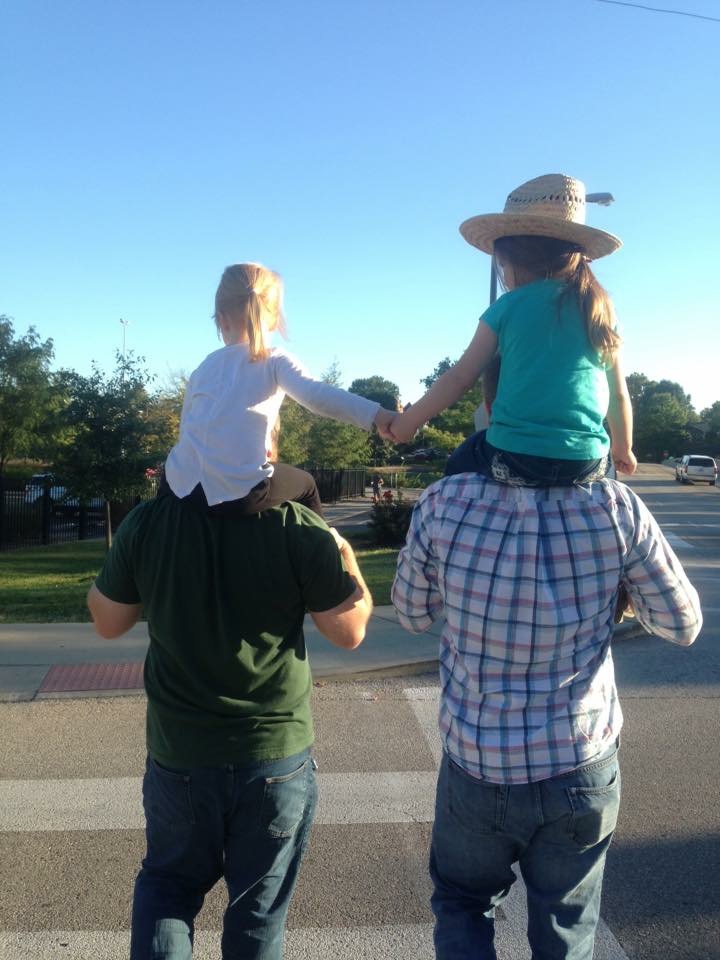
Behold, the music of my life:

 Unassailable Gospel
Leave a comment